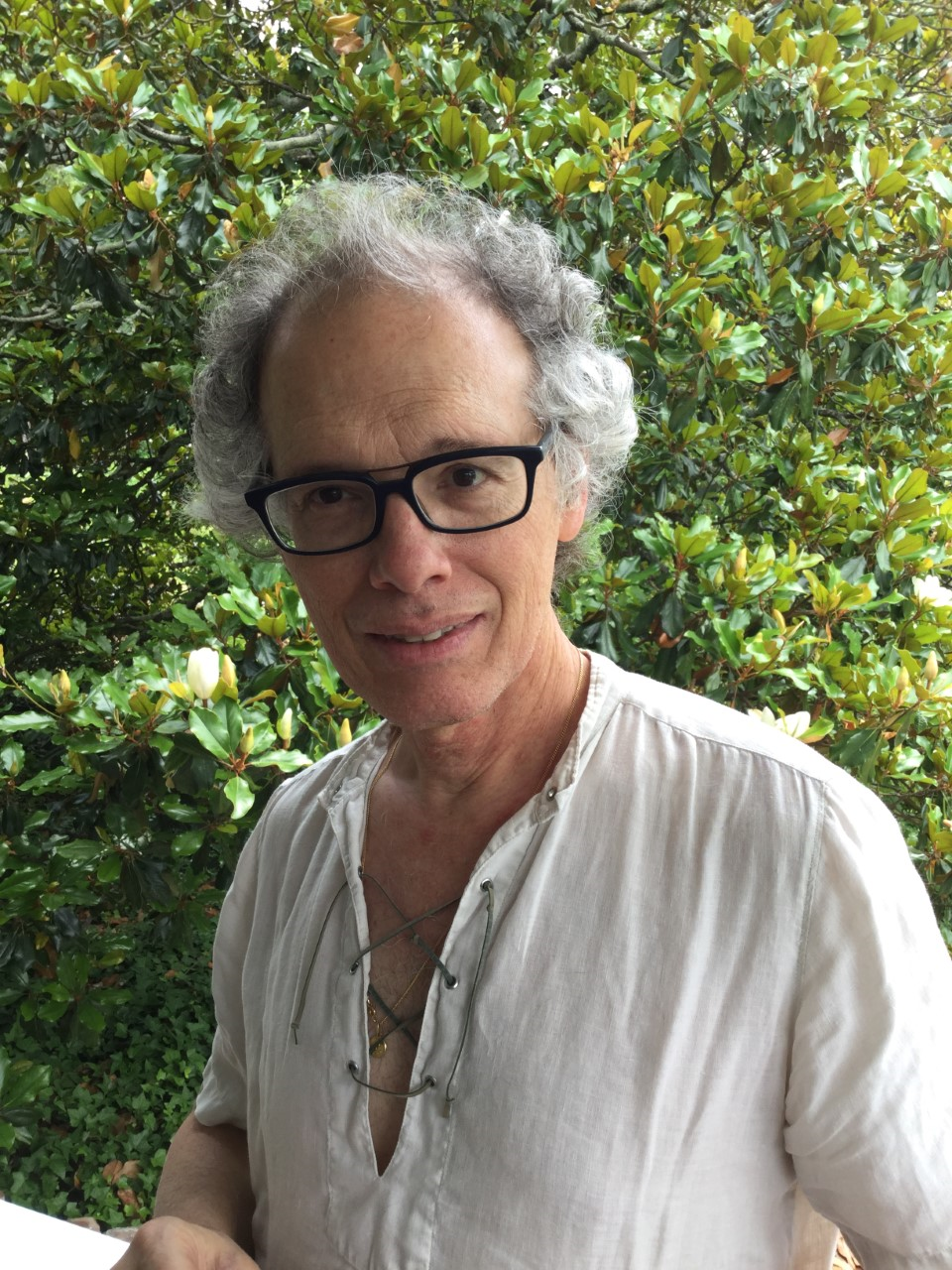
Dr. Carmine Di Biase is in the process of retiring from his position as a Distinguished Professor of English at JSU, where he has been teaching for the past 28 years. Originally from Salem, Ohio, he completed all of his higher education in that state, earning his B.A. in English from Youngstown State University, M.A. in English from Wright State University, and Ph.D. in English from The Ohio State University.
He completed his dissertation on Renaissance English fiction, as he had interest in the English novel’s emergence.
“As it turned out, Shakespeare read a lot of this early fiction, and naturally some of it, even some that was pretty awful, was transformed in the amazing crucible of his brain and integrated into his plays. For this and other reasons, Shakespeare became my main literary preoccupation. Also, because my first language is Italian, I have always been drawn to Shakespeare’s weirdly Italianate worlds. And modern Italian literature, too, has drawn me mightily, especially translation, which I think is one of the most important, most instructive, forms of literary study.”
Before Di Biase began his career at JSU in 1993, he was working at The University of Tennessee at Knoxville on an adjunct contract. He applied for a position at JSU because of its proximity, as he could easily drive to the school when it came time for his interview. It appears that it was fate for Di Biase to work at JSU, as he states, “… right after I got home [from the interview], the Blizzard of 1993 happened. That meant that no one else could be brought to campus, and the hiring committee had to settle for me. This might be legend, but I’d like to think it’s true. I loved the campus and the warmth of everyone in the English Department… I took the job and never looked back, never looked for another job, and have never had any regrets.”
Jacksonville was also a beneficial location for Di Biase when it came to family; around the time of his interview, he had just met his (future) wife Susan, to whom he would get married in Jacksonville, and whose father lived in Auburn.
Though he has taught several courses over the years, Di Biase does not have an absolute favorite. He thoroughly enjoyed the Shakespeare courses but finds that most of his standout memories from teaching took place during his English Composition (EH101) courses. When speaking about his initial request to instruct the Composition courses, Di Biase says, “I wanted to go back to the basics with the students, to their own writing, to that place where you discover yourself and how to represent yourself in words, and where you really feel the importance of doing that with precision and grace. The excitement of discovery at that level can be intense.”
Di Biase feels that the most noticeable change that has occurred during his time here has been the “level of preparation among the faculty.” He feels that his newer colleagues in all departments of the School of Arts and Humanities with whom he has collaborated and built connections, regardless of academic discipline, have helped advance it. This development is one of many things that Di Biase will miss when he retires this Spring. “I have loved my job. I will miss nearly every part of it. Above all, I will miss the students, seeing their new faces and meeting young new minds, every semester. I will miss especially the one or two highly unusual students who show up not because they want a grade but because they want to discover themselves and their world. And of course, I will dearly miss seeing my colleagues and being part of their workaday world.”
During his retirement, Di Biase plans to “read more, write more, bicycle more, and try to play the violin better.” He is already a member of the JSU Civic Orchestra and the Gadsden Symphony, and restores violins, violas, and cellos in his spare time. In addition to his hobbies, Di Biase intends to help around his house more, on behalf of his wife who will still be teaching at Gadsden State and tending to her cello studio at Gadsden’s Cultural Arts Center.
There are already many avenues that Di Biase is following right now. He has been writing (bi)annually for the Time Literary Supplement in London and plans to write more often in his retirement.
“I’ve done articles and translations. The latest appeared just a few days ago, and I have another one slated to appear this month… And I have several longer, scholarly articles in the works as well, for more specialized academic journals. Some are on Shakespeare (I’m finishing up an article now on The Tempest and another on Hamlet) and on Italian literature. I’ve recently finished a translation of Carlo Collodi’s sequel to Pinocchio, for example, which I hope to publish before long. And I have done all the research for an article of an Italian modernist I especially love, Italo Calvino.”
Di Biase writes original poetry, as well, and is set to have a manuscript of his works published in the near future. “I was translating some Italian poems a few years ago when I found myself writing some of my own. I sort of fell into writing verse, exploring lyric forms, closed ones and open, and rediscovering my love of English poetry all over again from this different, more intimate perspective,” he explains. Two of Di Biase’s poems appeared earlier this year in the English online arts journal La Piccioletta Barca.
Di Biase will also remain working on The Shakespeare Project, this time under the title of dramaturg, meaning he will be “compiling study guides and working with the actors and directors to clarify meaning and ensure that the oral delivery of the lines is sound and coherent and respects what might have been Shakespeare’s wishes.”
If Di Biase had to give advice to new faculty at JSU, it would be to “Meet your students where they are and don’t try to impress them with what you know. Rather than handing them sources of knowledge, set the students up to make discoveries of their own. And you’ll be surprised by how much the students will teach you. Some of your best ideas for scholarly articles and books, which you’ll have to write to keep your jobs, will come from—and will be tested in—the classroom.”
His advice to students is much simpler: “Try to have two, contradictory ideas in your heads at all times: 1) doing well in class matters, and 2) grades don’t matter at all.”


 JSU Arts, Humanities & Sciences Blog
Leave a reply to Naima Elmaghnougi Cancel reply