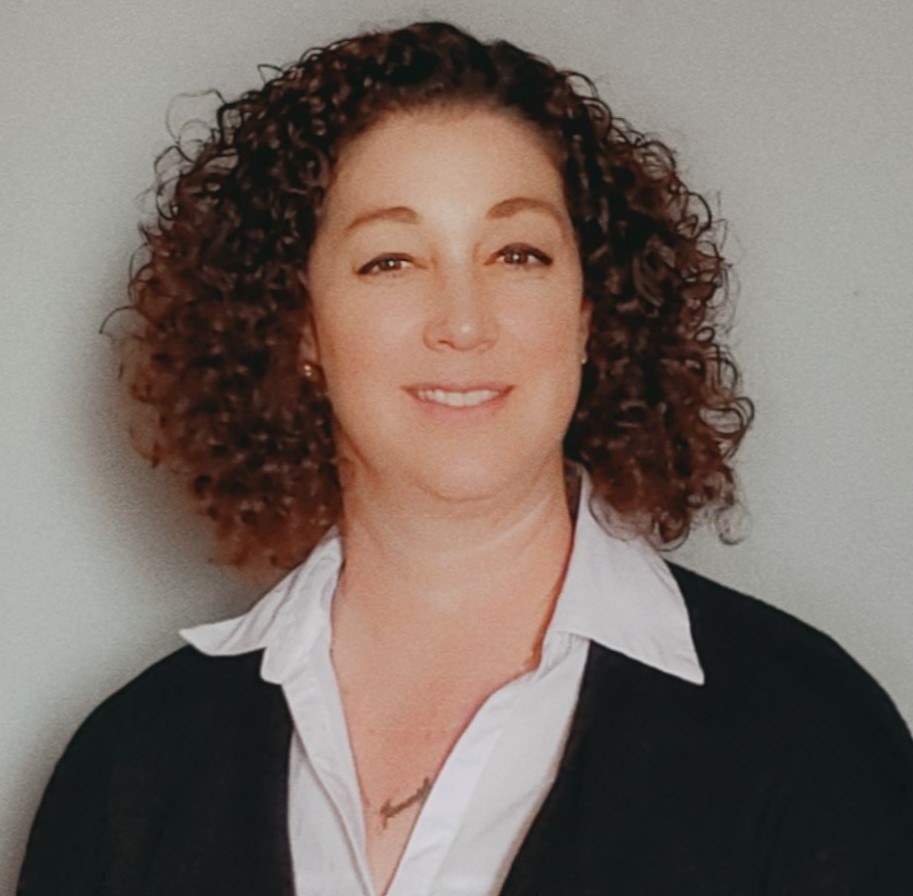
Dr. Jennifer Gross, Associate Professor of History, serves as the Gender Studies Advisor at JSU. This month, she is serving as co-chair of the Women’s History Month Planning Committee.
Why are you passionate about Women’s History?
I would say that my passion for Women’s History and feminism comes from my own life experiences and from my ongoing study of history. When I was in high school, I attended a very small, religious school. My senior year, I decided that I wanted to be the senior class president. When I nominated myself, I was told by my homeroom teacher (after he laughed at me) that I couldn’t be class president because I was a girl. While that was perhaps the beginning of my feminist awakening, so to speak, it was certainly not the only instance of misogyny I faced as I grew older. Like building blocks, each instance made me stronger and more committed to empowering myself and other women.
As for the role of history in motivating my feminism, I would point to a formative experience in college as the launching point and then my continued study of history for its lasting impact. During my junior year, I had a good number of entry-level history classes under my belt and was plugging away at my upper-level history courses when I enrolled in my first Women’s History Course. This class was unlike any other history class I had ever taken. It was team taught by two female professors, my first female professors in fact. They taught the class using the Socratic method, so there was a lot of class discussion. In terms of topics, the class took on all the traditional high points of the American history narrative but then asked the amazingly simple question, “so…what were women doing during this era?” I was hooked on Women’s History from then on. Since that day, every exploration in history I have undertaken has begun with that simple question and then expanded from there to assess the role of socially constructed expectations of gender.
I have found that it is impossible to study history and not see the patriarchal structure and misogynistic nature of American society. It is there from the very beginning and continues today. We live in an exciting era in terms of female equality though. We don’t have it yet, but the awareness of gender inequality as well as other forms of inequality in this country only seems to be growing.
What was your involvement in planning/organizing the Women’s History Month activities?
This year, I am serving as co-chair of the Women’s History Month Planning Committee with Audrey Simmons, Residence Life Coordinator for Curtiss and Fitzpatrick dorms and the Leadership House for Women. We have a solid number of very committed and very talented JSU students, faculty, administrators, and staff on the committee. It definitely was a group effort. We’ve planned several different events for the month and have received a great deal of support from the administration for those events. This year is only the beginning. From here forward, I anticipate only growth in JSU’s celebration of Women’s History Month.
Which historical female figure do you admire the most, and why?
That is a very tough question. I would say that I don’t have just one; it’s more like one or two per era. During the antebellum era, it would be Harriet Tubman and the Grimke sisters for their efforts to disrupt and destroy the institution of slavery. Jane Addams, the Progressive reformer, is also a favorite. She established Hull House and dedicated her life to helping the poor and working classes in Chicago during the late 19th century. During the Civil Rights era, it would be Charlayne Hunter Gault, a champion of racial justice, who was one of the first African-American students to integrate the University of Georgia. Feminist icons like Sojourner Truth, Lucretia Mott, Elizabeth Cady Stanton, Emmeline Pankhurst, Gloria Steinem, Ruth Bader Ginsberg are, of course, on the list, and there are many, many others as well. The unifying characteristic that all my “sheroes” share would be their commitment to reforming society to make it better for ALL people regardless of race, ethnicity, class, gender, or sexuality.
What is your specialization?
I specialize in the study of the American Civil War and Reconstruction with a focus on gender. When we think of war, we think of soldiers on battlefields, but a war’s impact expands well beyond the battlefield. Specifically, I examine the experiences of Confederate widows from all classes, exploring how they attempted to rebuild their lives after their soldier-husbands’ deaths. In a patriarchal society built on the twin pillars of slavery and women’s dependence through marriage, the war threw quite a wrench into the South. So, my research also explores how Southern society en masse attempted to deal with what amounted to a new class of white, Southern women who were no longer safely ensconced within marriages while that same society also tried to rebuild white supremacy in the South without the institution of slavery.
What is your favorite class to teach at JSU?
I love my undergraduate and graduate level courses in the Civil War and Women’s History. In the undergraduate versions of these classes, I get to see firsthand how the study of history can change and open the minds of students who perhaps come into the class thinking “history is boring.” Reading and discussing primary documents can have a profound impact on students.
The graduate versions of those two classes are great fun as well. They allow me to read new books in my field or re-read books that I consider to be part of the canon, gaining new insights from my own reading or re-reading but also from the discussion of those books with my students.
What do you love about the JSU History Department?
The freedom and support that our chair, Gordon Harvey, gives us in our classrooms and to pursue our scholarship. We could not ask for a more supportive chair. I also have a great group of colleagues
 JSU Arts, Humanities & Sciences Blog
Leave a comment