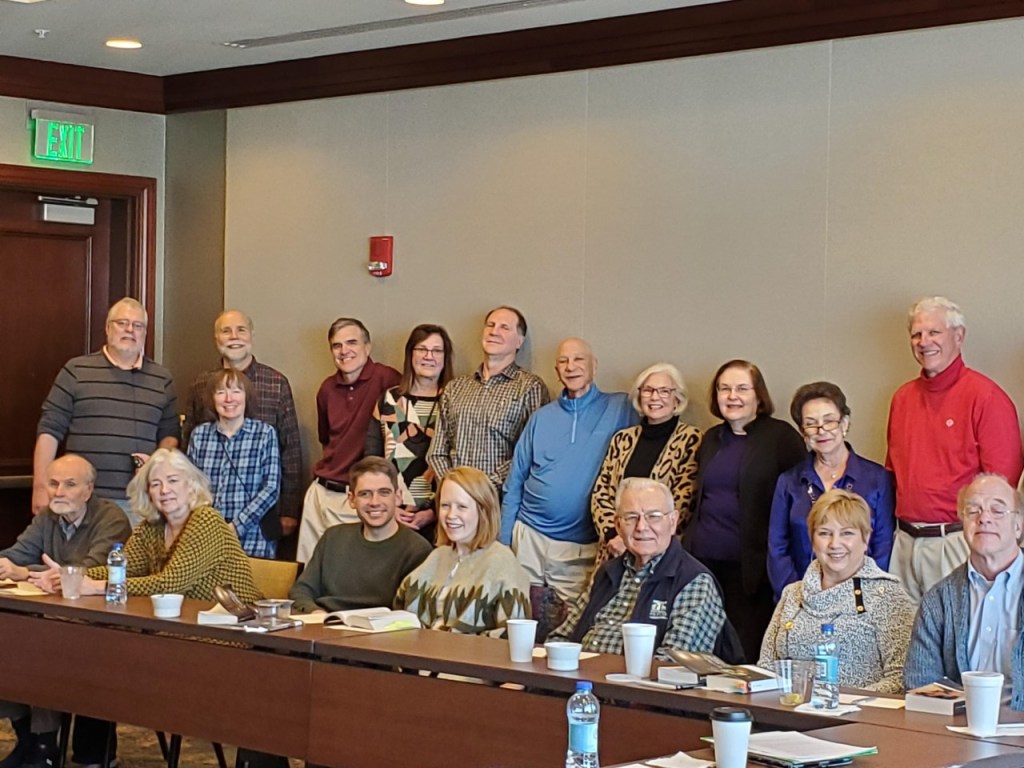
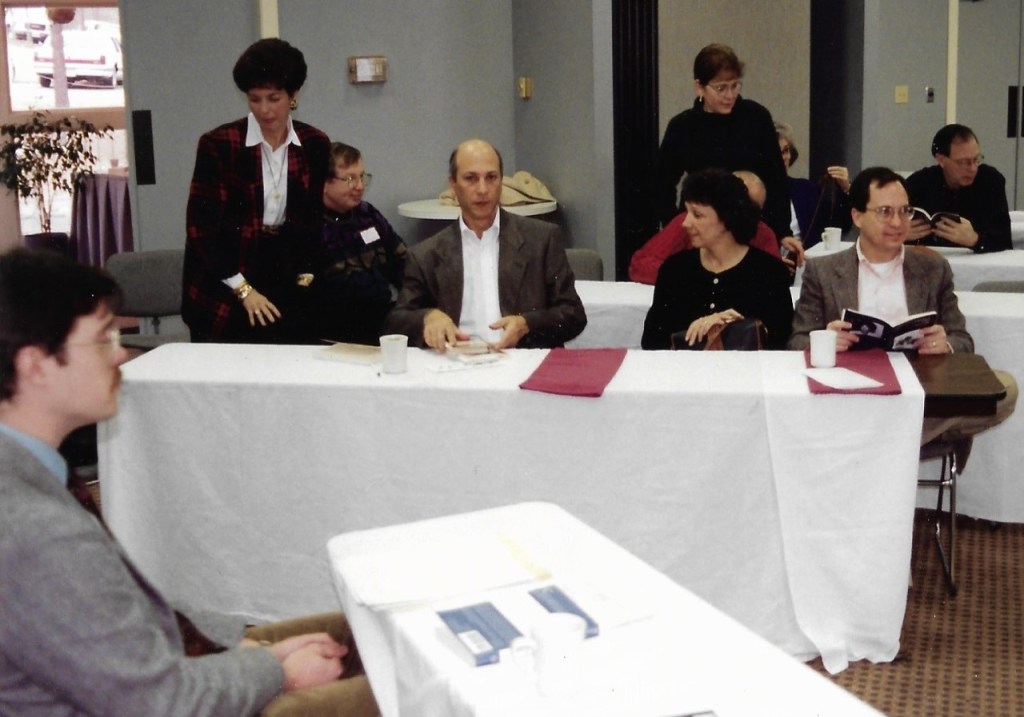
Dr. Randall Davis, Professor of English at JSU, has been involved with an ongoing literature project for twenty-seven years. The project seeks to bring literature to medical professionals around the area. The 2020 Literature and Medicine Retreat was held this January from the 25th-27th and was Dr. Davis’ 27th consecutive retreat.
How did the Literature and Medicine Retreat begin?
In the spring of 1993, English Department Head Dr. Clyde Cox asked me, a young assistant professor in my second year of teaching at JSU, if I would be interested in serving as a discussion leader for the Literature and Medicine Retreat, sponsored by the Alabama Chapter of the American College of Physicians. The Alabama group had been dissatisfied with the moderator for the first two retreats; he had apparently been too pedantic. The one piece of advice I was given when I began the winter 1994 retreat was to “let them talk.” And let them talk I did…and continue to do. Little did I know that this invitation would lead to many lasting friendships and initiate one of the most rewarding professional experiences of my career.
Why combine literature and medicine?
Part of a growing trend of including humanities—particularly the reading and discussion of literature—the Literature and Medicine Retreat was designed to bring together medical professionals and their spouses from throughout Alabama for a weekend of discussions of works of literature.
Where do you meet?
For all but the first few years we’ve been meeting in Montgomery the last full weekend in January. Participants come from Mobile, Birmingham, Tuscaloosa, and other parts of the state, so Montgomery is a convenient central location.
What kind of books do you read?
From the outset, the group has read works in different genres. Our pattern for at least the last 25 years is to read a novel, a play, a collection of short stories, and a group of poems. For years we’ve also watched a film on Friday evening before the actual discussions begin on Saturday morning; the film is always connected in some way to one of the works we’ll have read that year. Sometimes we have read material that focuses directly on the experience of doctors, sometimes written by doctors themselves. For example, a number of years ago we looked at The Doctor Stories by William Carlos Williams. Another year we read A History of the Present Illness by geriatrician Louise Aronson, a series of interrelated stories inspired by her own experience treating elderly patients.
Most of the works, however, have little directly to do with doctors and patients. As internists, the members of ACP practice by talking with their patients, listening to their stories, dealing with a wide range of personalities. So they like a wide variety of literature. We’ve read Homer’s Odyssey (Robert Fitzgerald’s translation), stories by Balzac, Leo Tolstoy’s Anna Karenina, Charles Dickens’ Great Expectations, John Fowles’s The French Lieutenant’s Woman, William Faulkner’s Absalom, Absalom! and Marilynne Robinson’s Gilead.
How do you choose what literature you will study?
The selections are usually drawn from suggestions that participants are encouraged to submit. One of the personal benefits that I’ve gotten out of the retreat is that I’ve read works that I might not otherwise have ever picked up.
What did you read this year?
For the 2020 reatreat, we watched the film The Madness of King George on Friday evening. On Saturday, we began with a discussion Alan Bennett’s play The Madness of George III (the source of the film) and then moved on to selected stories by Raymond Carver. Saturday afternoon we discussed George Eliot’s Adam Bede. We concluded the retreat last Sunday morning with selected poems by Robert Browning.
The following are several statements from retreat participants:
Mike Wienrib
The Alabama Chapter of the American College of Physicians Literature and Medicine Retreat is a gathering of Internal Medicine doctors who love literature and meet annually one weekend in January to discuss a pre-selected play, novel, book of short stories, and book of poetry, led by an English professor-facilitator, Dr. Randall Davis. Some attendees are in medical practice, some are retired, and many are affiliated with the UAB or the USA Schools of Medicine. Recently a few medical residents have participated.
The discussions are informal, relaxed, and friendly, including by spouses in attendance, with highly intelligent, spontaneous comments and debate always in good humor and even tweaks by friends–all reflecting an interest in people with varying points of view, so helpful in the practice of medicine. Although medical issues may arise, the focus is on the works and their issues. Because of the enthusiasm and lively discussions that follow, it is apparent to me that this group of doctors care greatly about their patients.
As moderator of this group for 27 years, Dr. Davis excels in bringing background history and academic structure and ideas to the works, plus adding context to the remarks of the discussers. There is an abiding friendship that has developed through the years among the group with Dr. Davis, whom we call “Randy.” I found myself hooked from the very first time I attended, making it one of the highlights of my year for the 16 years I have attended since retiring.
Mike Weinrib, M.D.
Montgomery, AL
Bill Boyd:
I have been the physician leader of the AL Chapter ACP Literature and Medicine Retreat for the past 10 years, and have attended almost all of our 29 annual meetings since its inception. The Retreat is an opportunity to get together with old friends (some of whom I have known for almost 50 years) and to meet and make new friends, all of whom love literature. The Retreat is an opportunity to spend a weekend discussing great works of literature–a novel, a play, short stories and poetry–under the leadership of a seasoned master teacher of English, Professor Randall Davis of Jacksonville State University. The works that we read each year are works of literature that, without the discipline of this annual meeting, I might never make the effort to read. Professor Davis, and all the attendees, always add immeasurably to my understanding of and insight into the works of literature that we read and discuss. I look forward to the meeting every year, and it is one of the great pleasures of my life. It has enriched my life.
Bill Boyd, M.D., FACP
Montgomery, AL
Alan Stamm:
Literature & Medicine has been a highlight of each winter for >25 years. It has deepened my understanding and broadened my enjoyment of literature, particularly plays and poetry. It has exposed me to countless authors and stimulated my study of many others of their works. The observations, insights, and background information provided by Dr. Randy Davis and my colleagues have opened my eyes to other perspectives and enhanced my appreciation of many novels and stories. Reading is truly a way to experience others’ lives and to obtain more peace and joy from one’s own life.
Alan Stamm, M.D., retired internist
Birmingham, AL
Michael Meshad:
My wife, Kitty and I have attended The American College of Physicians’ annual “Literature and Medicine Retreat” for twenty-nine consecutive years. The first two years were so unpleasant that the entire Mobile contingent threatened to quit the meeting. Then Randy Davis from Jacksonville State University, became our moderator and all threats and complaints ended. For twenty-seven years now we have all enjoyed a lively, educational, and informative annual weekend discussing novels, short stories, plays, and poetry that we would otherwise have never discovered. Thank you Randy for your guidance, support, and friendship over all of these years and our hope is that this will continue for many years to come.
Dr. Michael Meshad, Hematology/Oncology
Mobile, Alabama
 JSU Arts, Humanities & Sciences Blog
Leave a comment