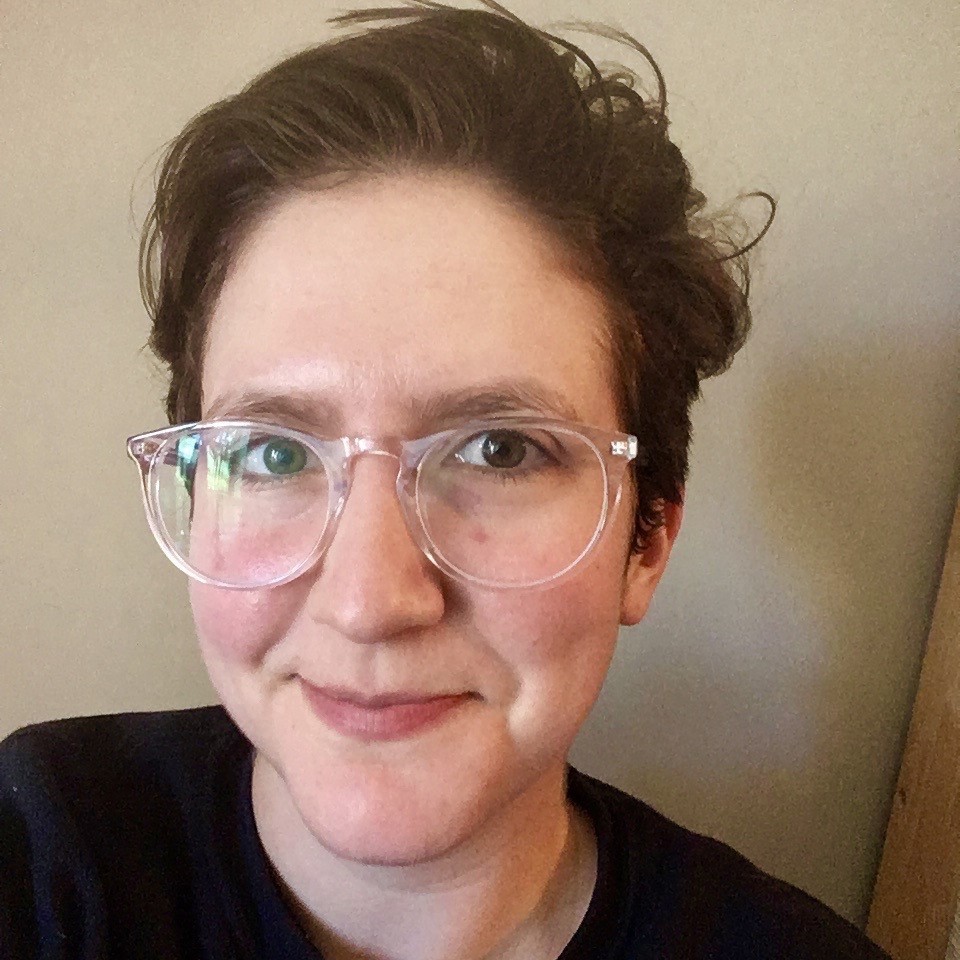
Emrys Donaldson is a writer and professor from Vermont. This fall, Donaldson joined JSU English faculty as an Assistant Professor of English.
Where are you from? I grew up in Vermont, and I moved to Tuscaloosa in 2015.
Why did you decide to pursue English (or more specifically, Creative Writing)? For a while I wanted to pursue psychology research. I came to realize during a fiction seminar (my senior year of undergrad at Cornell University) that it brought me more joy than anything else and that it was possible for me to pursue writing and teaching professionally. I came from a family where people worked for financial stability and not generally for fulfillment. Nobody was an artist. I was very lucky to have good teachers and mentors in my life who helped me realize that many paths are possible.
Did you always plan on teaching? When I was twelve, I job-shadowed a Milton professor at St. Michael’s College in Vermont. I loved what his workday looked like, especially his interactions with students. When I started to be the instructor of record myself (in graduate school), I definitely struggled at first with classroom management. Pedagogically, I tend to be of the opinion that self-directed students learn best. However, after teaching at Donaldson Correctional Facility through the Auburn Prison Arts + Education Project, I realized how much I loved teaching and decided to fully commit to it. My students at Donaldson were amazing. I am finding that my students at JSU are, too!
What classes are you teaching this semester? This semester, I am teaching American Literature, Oral Communication, and a Creative Writing/Fiction workshop. Next semester, I will be teaching Introduction to Creative Writing (a brand-new course!) and American Literature. I highly encourage any interested students to sign up for my creative writing class!
So far, what has been your favorite thing about working at JSU? I love the friendliness of my department and the university at large, as well as our proximity to nature. I am also a big fan of—and highly amused by—Cocky.
What accomplishment(s) are you most proud of? Honestly, I’m proud of finishing my undergrad degree summa cum laude because those were tough years where I did not have an active parental figure in my life. I really empathize with my students—they’re going through a lot, whether that’s parenting, returning to school, finding a direction, or just figuring out “how to adult.” I’m also proud of having finished manuscripts for two novels and a story collection so far.
Are you currently working on any creative works? Currently, I’m revising my MFA thesis, The Festival, in which a group of friends make a sacred pilgrimage to a music festival in the deep woods. Climate change has rendered necrotic the landscape through which they walk. Along the way, they tell each other stories which seek truths at odd angles. One of the main narrators hybridizes Middle English with modern text-speak. Aside from The Festival, I’m shopping around my story collection Embodied and working on personal essays, mostly about transmasculine relationships.
What is your writing process? How do you find inspiration? I collect ideas, snippets, and fragments in a commonplace book, and let these compost (figuratively). After a while, I start to draft stories or personal essays. On occasion, a story balloons into a longer project. From these drafts, I revise, revise, and revise again, tossing some stories along the way. Something is done when I’m sick of it—and usually after a while I come back to it to revise some more. I find inspiration in queer and trans art, artists, and families; in canines of the South; in the tender spaces of care and resistance which exist here, often unmarked.
Do you have any advice for JSU English majors and writers? Many undergraduates, especially those who are the first in their families to go to college, can feel a lot of pressure to have everything figured out before they graduate. College is a time for exploration, for making mistakes, and for letting yourself follow what feels right. Let yourself do that as much as you can. It’s okay to change your mind. Ask for help: your teachers, mentors, coaches, advisors, and friends all want to be there for you. Everything will work out. Keep writing.
 JSU Arts, Humanities & Sciences Blog
Leave a comment