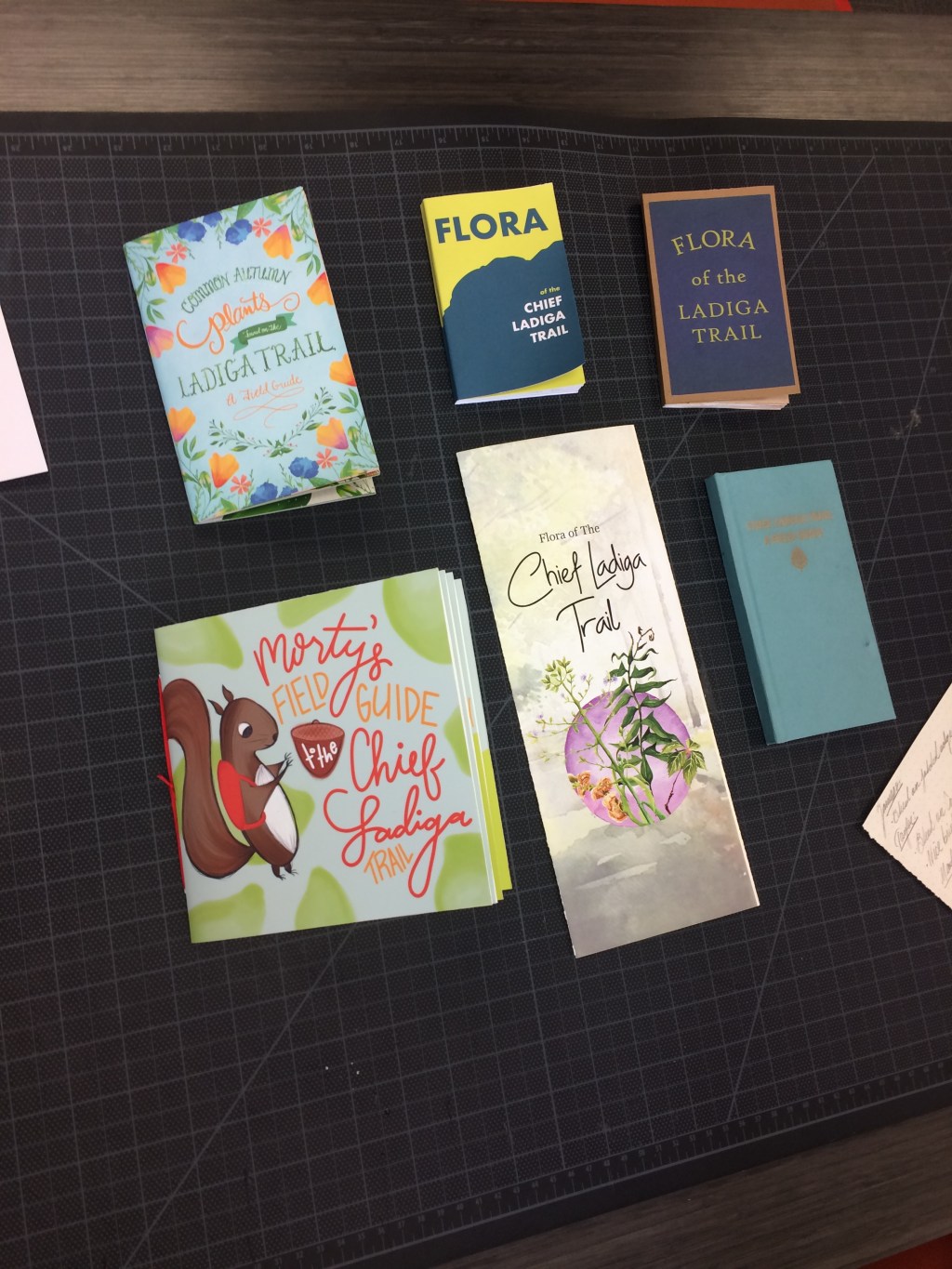
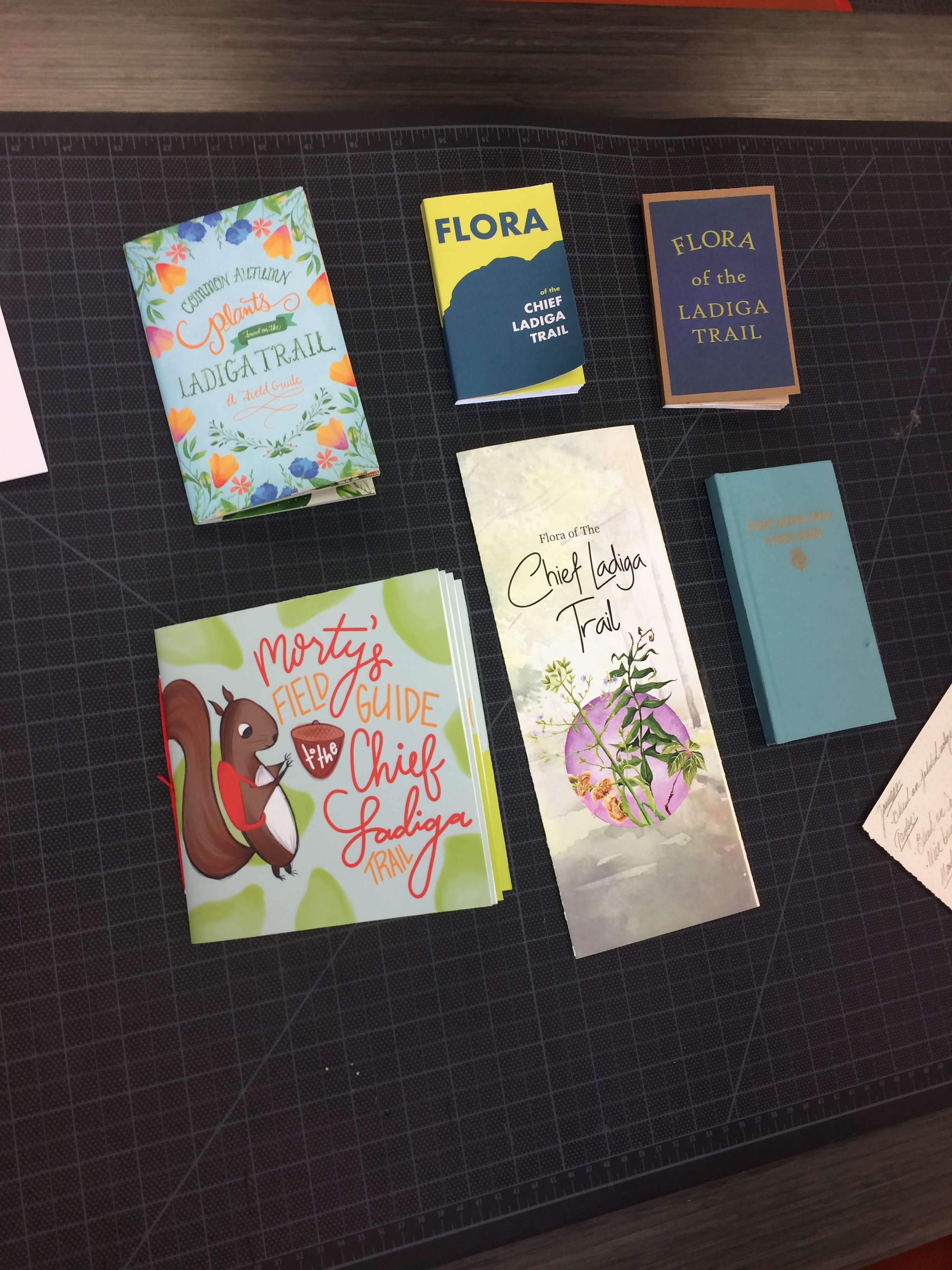
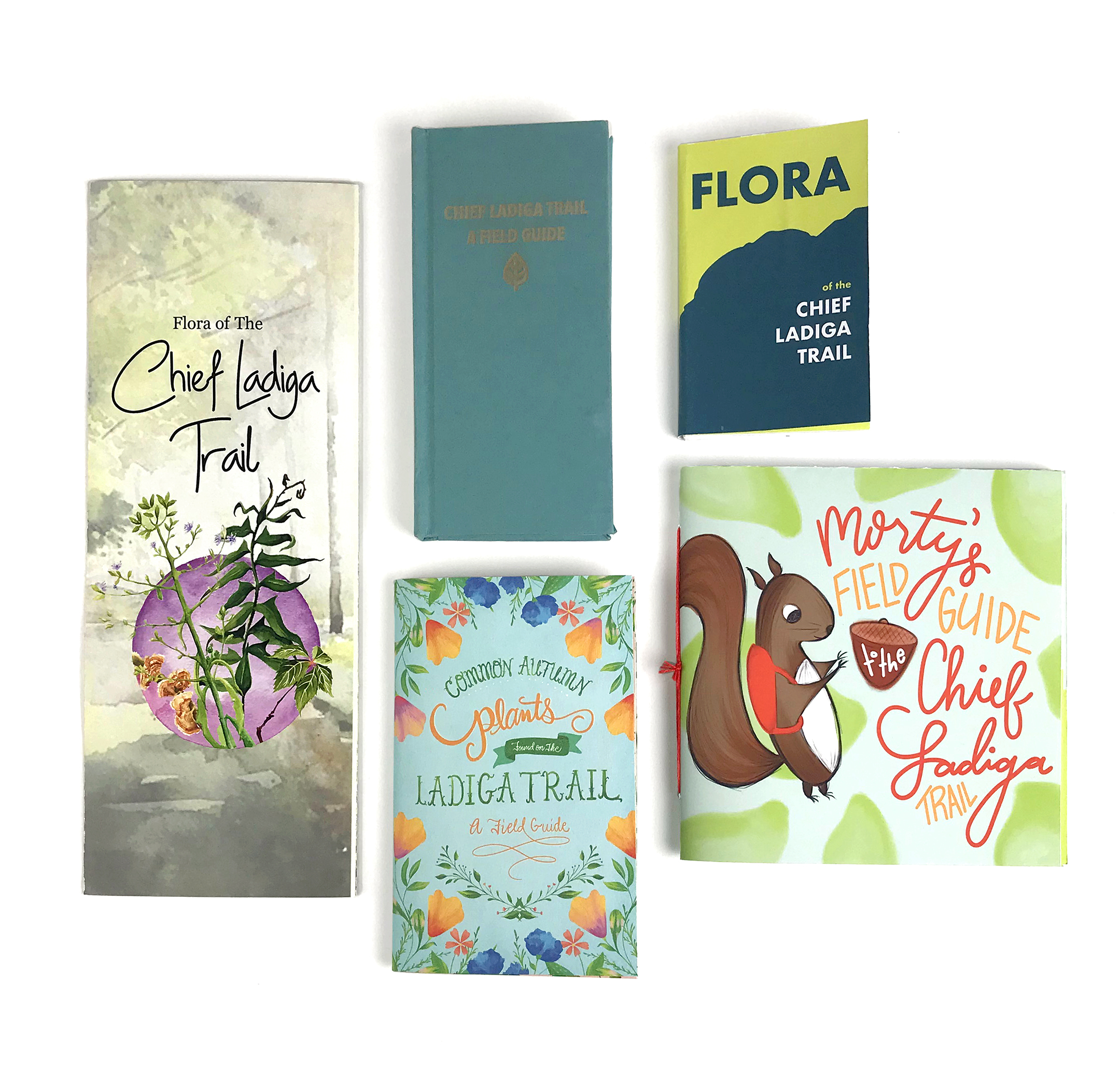
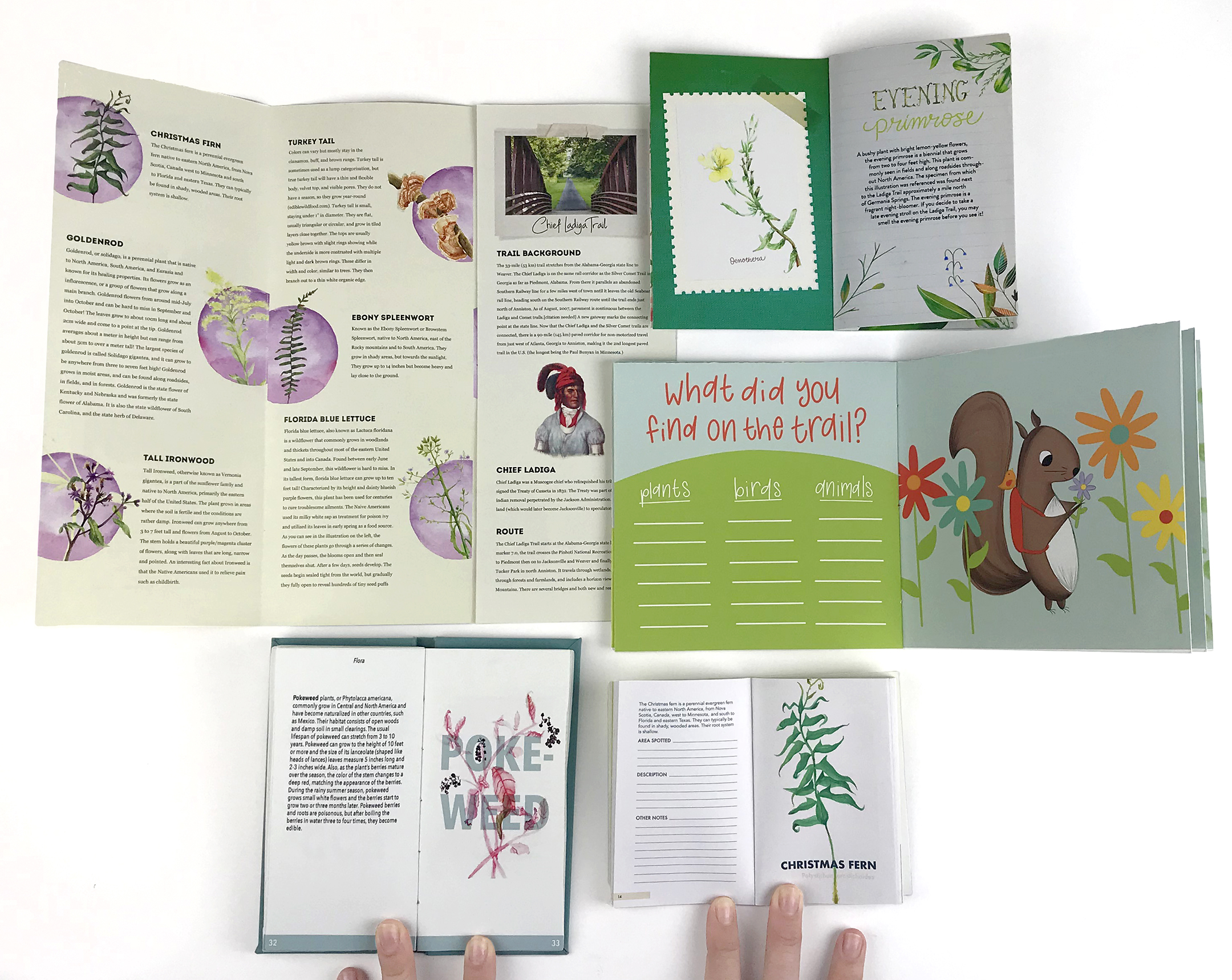
Last semester, two classes in the Art Department collaborated on a project that showcases the beautiful trail that runs straight through JSU. Professor Jamie Runnells’ Advanced Typography students put together field guides for the Ladiga Trail; their work was based on Professor Bryce Lafferty’s illustration students’ drawings of the plants found there. Dr. Triplett, a botanist from JSU’s biology department, assisted the students by helping them identify the different kinds of plants along the trail. Though these students did not work together directly, they built on each others’ art and ideas to create something special.
How did you create/get involved in this project?
Professor Lafferty: The idea came while visiting New York city last March. There is a walking path through the city that was developed on an old elevated train line. It’s called The High Line. I found a beautifully illustrated field guide for that trail by an artist named Mark Dion. It included the different plants and animals that one can discover on the High Line (some of them very surprising and some not), and it provided a bit of written information about these creatures and the trail itself. It struck me that we have this amazing trail that runs right through town and the center of campus (The Chief Ladiga Trail, CLT). It’s used and enjoyed by a lot of people – both students and members of the community. It’s something my children and I particularly enjoy. I thought It’d be fun to have something like the High Line field guide for the CLT that a family or an individual could take along for a walk/ride and look for common plants. I also thought it’d be a way to further show and enjoy the abundant beauty and natural resources that we have in this region.
Professor Runnells: Professor Lafferty asked me if I taught a class that could incorporate the design and layout of a Ladiga Trail Field Guide—using his illustration class’s drawings—into the curriculum. I was teaching an Advanced Typography course that semester, and it seemed like a good fit for the project and the course. (Typography is the art/process of designing or arranging type.)
What exactly did your students do?
Professor Lafferty: I was looking for a real-world illustration project my students could work on. I’m building an illustration component to the drawing concentration in the Department of Art–something that will prepare my drawing students to turn their skills into a livelihood. There is a long tradition of botanical illustration—for aesthetic pursuits and also for science. My students learned how to create botanical illustrations in watercolor that are aesthetically beautiful, but that also are scientifically accurate and can be used to identify a species. This is a project that I hope continues. In future classes, I’d like my students to illustrate common animals that can be found along the trail as well.
Professor Runnells: My students were provided the CLT plant illustrations and descriptions, and then they created concepts and cover-to-cover designs for the trail field guide. Concepts ranged from a guide for children (with interactive/learning components) to a hardbound book for the serious outdoorsman (which included additional adventuring resources) to the simple pamphlet guides for the casual tourist and everything in between. My students created their unique concept and designed the layout of their book. In some cases, they created extra content beyond the illustrations and plant descriptions provided, and then they printed and bound (or created) the physical mock-up of the guide.
What concepts/skills did your students develop through this project?
Professor Lafferty: The other really interesting part of the project was learning the science behind botanical illustration. For this, Dr. Jimmy Triplett was invaluable. He brought my class out onto the trail to help us understand and identify some of the plants we were seeing. I was amazed; as soon as we stepped on to the tail, there was so much to notice and see that my students and I just couldn’t comprehend without help from an expert. And I think that is one of the really great things about an art/design project like this—literally, we are showing people how to see things that perhaps would not be appreciated or enjoyed without the aid of art! Art is really powerful in this way.
Professor Runnells: As designers, we are often handed other artists’ photographs or illustrations and then must decide how to incorporate them into our designs. The project was a great opportunity to experience that mode of working, and luckily, the illustrations were fantastic and really added to the quality of the final products.
What specific details did your students focus on?
Professor Lafferty: The neat part of this project was how cross-disciplinary it really was. My students could not have been successful with just a strong knowledge of drawing. They needed to focus on three things: 1) strong skill set in drawing and watercolor painting, 2) a working knowledge of botanical science, and 3) how the illustrations needed to be prepared in order to be published in a design project. I think that is what is asked of artists and designers today: to wear many hats and pull together knowledge from more than one discipline.
Professor Runnells: Format and typography. From folded maps/brochures to hard- and soft-bound books, the students really considered the form of the information. The typefaces they chose and how they applied them were very important as well.
What did your students like most about this project?
Professor Lafferty: I’ve received some feedback from my students. They seem to have liked the project and how we were able to have experiences beyond a single classroom and discipline. I think they enjoyed choosing and learning about the plants that they illustrated. Many of these plants are quite interesting; many have traditional uses and folklore associated with them. I think my students enjoyed telling the stories of these plants. For instance, did you know goldenrod was once the state flower of Alabama? I know that my students also really enjoyed seeing the finished field guides that Jamie’s class created. Her class produced a quality of work that was beyond my expectations.
Professor Runnells: Oh man, I’m not sure. I think they enjoyed sharing the final results with all of the faculty and students involved!
 JSU Arts, Humanities & Sciences Blog
Leave a comment