Dr. Tamara Levi is a professor of history at Jacksonville State University. Originally from Florida, Dr. Levi has studied in several institutions across the country in pursuit of her education; she earned her bachelor’s and master’s degrees in North Carolina before completing her doctorate in history in Nebraska. As an undergraduate student, as soon as she got into her upper-level history classes, she knew that she wanted to one day teach history at the college level. Her major fields of study are American Indian history, the American West, and comparative indigenous history. She currently teaches U.S. history and comparative classes while also serving as the faculty advisor for Phi Alpha Theta, the National History Honor Society.
Being a history professor at JSU has several aspects that Dr. Levi appreciates. “I like having smaller classes that sometimes allow me to do more interesting things in class than just lecture,” she said. “I also enjoy working alongside the faculty we have here.”
Dr. Levi’s work extends beyond the classroom, however. In 2016, she published a book entitled Food, Control, and Resistance through Texas Tech University Press. She explains that the book is about how the governments of the United States and South Australia used food rations in their assimilation campaigns of indigenous peoples. “My new research project,” she reveals, “is about the court case surrounding the murder of Fushatchee Yoholo (Creek) in 1831 in Alabama.”
Additionally, Dr. Levi is part of an interdisciplinary group that is creating an online curriculum for AASCU’s Stewardship of Public Lands. “[This is] a program that emphasizes democratic processes to negotiate solutions to issues surrounding public land use at Yellowstone National Park,” Dr. Levi explained. She is not only concerned with the history she studies in books; she works to preserve the natural history that exists in her own world.
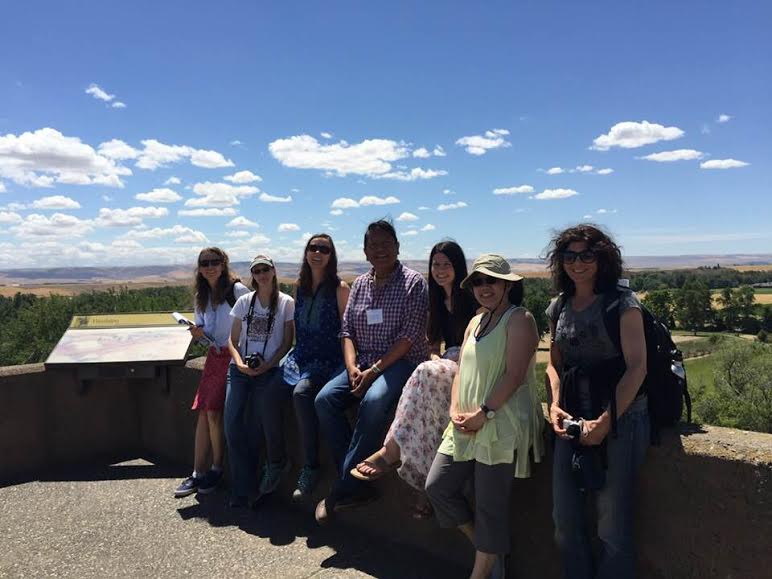
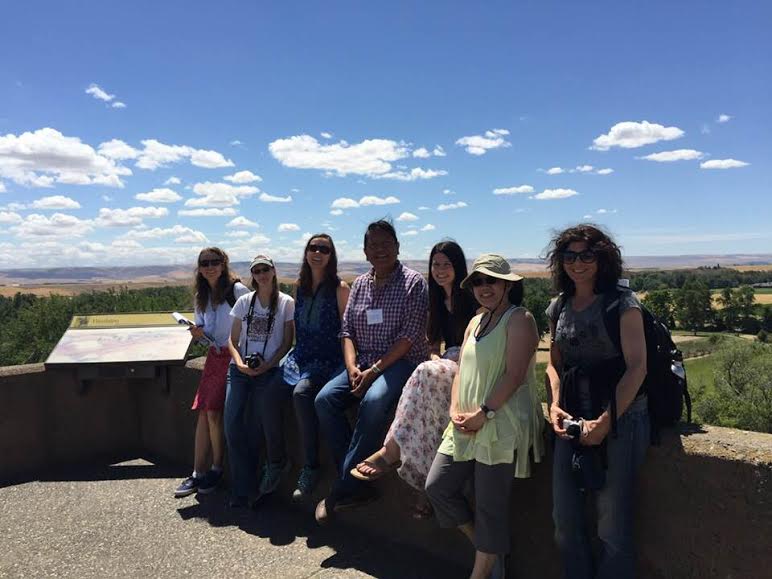
Another exciting event in which Dr. Levi was recently able to participate is the NEH Summer Institute at Whitman College. The National Endowment for the Humanities sponsors two-week seminars for higher education professors each summer. Dr. Levi went through a competitive application process to attend an NEH seminar in Washington that focused on the Native peoples of the Columbia Plateau region from pre-contact through modern issues.
Dr. Levi and her colleagues at the summer institute did not just listen to history lectures. “We had seminars on history, music, culture, literature, and current issues. We also made site visits to the Columbia River Gorge, Tamastslikt Cultural Institute, as well as other museums and historical sites,” she says. “We then used what we learned to begin developing curriculum modules to use in our classes.” In fact, Dr. Levi said that the main goal of the summer institute was to incorporate what she learned while there into her classes on Native American history. She predicts that her experience with the NEH will have a big impact in her classroom.
“With this institute and a 4-week NEH Institute on (On Native Grounds) that I attended at the Library of Congress in 2016, I plan on revamping the Native American history classes taught at JSU,” she stated. “I hope to be able to divide the current class into two so that students can delve much deeper into particular culture regions and specific topics. I also hope to offer a
graduate seminar on Native American history in the near future.” She thinks that the seminars have also affected how she will incorporate lessons about Native American peoples into her other American history courses.
Dr. Levi urges students–not just history students, but anyone studying on the college level–to take advantage of as many opportunities as they can. She suggests that students try to study abroad and take other trips whenever they get the chance. According to Dr. Levi, the ability to try new and different experiences is vital to a positive college experience (and a pro-
active life).

 JSU Arts, Humanities & Sciences Blog
Leave a comment